Skip to main contentResource added 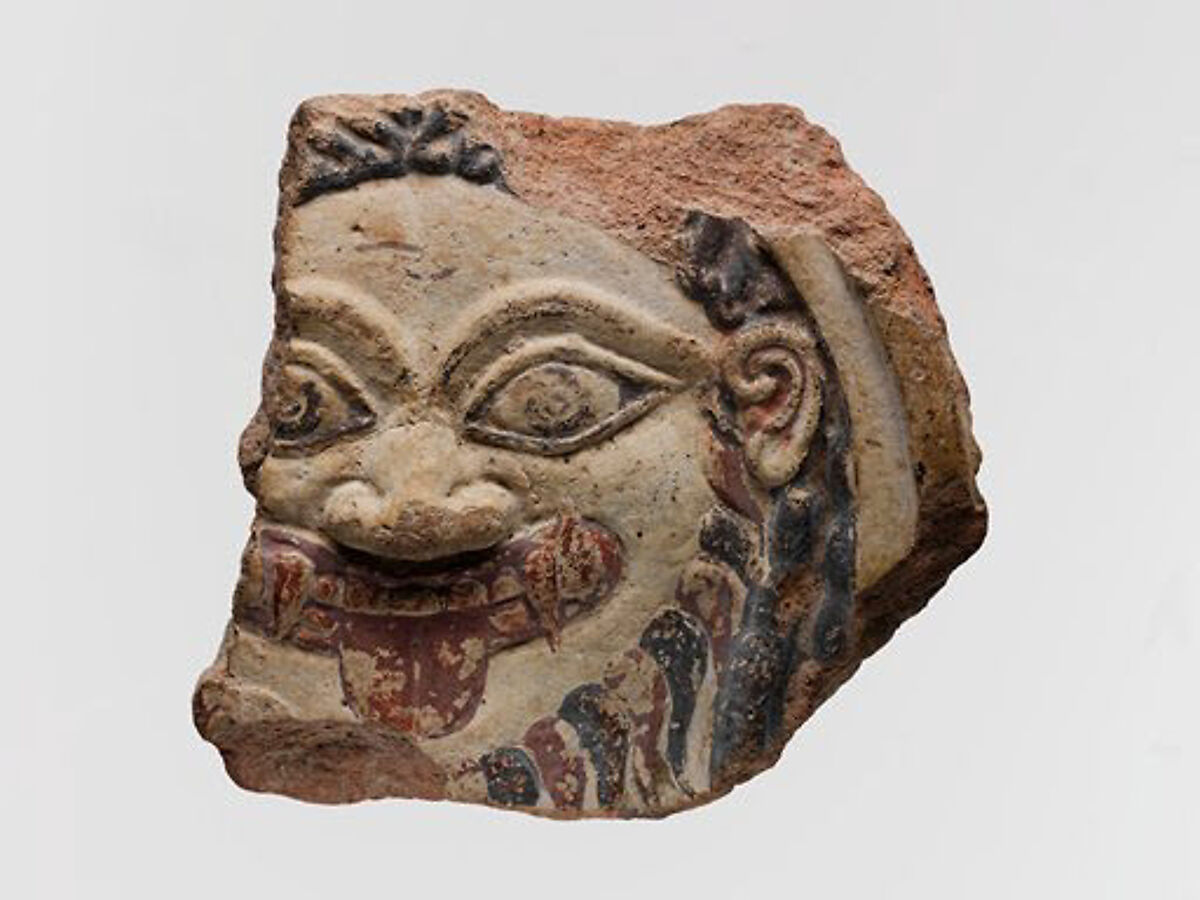
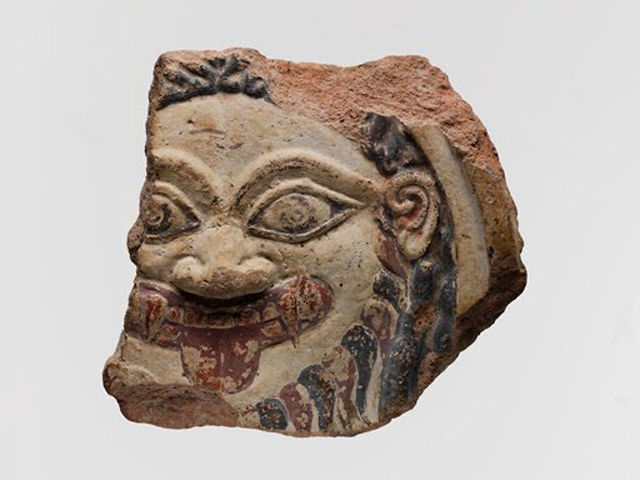


Antefix with the head of Medusa
Full description
This is an Archaic terracotta antefix depicting the head of Medusa, created by Etruscans in sixth-century BCE Italy. During this period, Medusa was commonly represented as a Gorgon (female monster) with a round face, wide eyes, protruding tongue, and sharp teeth. This monstrous imagery was intended to ward off evil, while the antefix also served a practical function by covering and protecting the ends of roof tiles.
Comments
to view and add comments.
Annotations
No one has annotated a text with this resource yet.
- typeImage
- created on
- file formatjpeg
- file size114 kB
- CitationTerracotta antefix with the head of Medusa. Etruscan, 6th century BCE. Terracotta with paint, 14 × 14.9 cm. The Metropolitan Museum of Art, New York. Fletcher Fund, 1927 (Object No. 27.122.14). Accessed from The Met Collection Online, https://www.metmuseum.org/art/collection/search/252929.
- creatorEtruscan artist (unknown)
- creditThe Metropolitan Museum of Art, New York, Fletcher Fund, 1927
- restrictionsNone (open access)
- rightsPublic Domain
- rights holderThe Metropolitan Museum of Art
- rights territoryWorldwide
Downloadable variants: