

Athena Parthenos of the Parthenon on the Akropolis
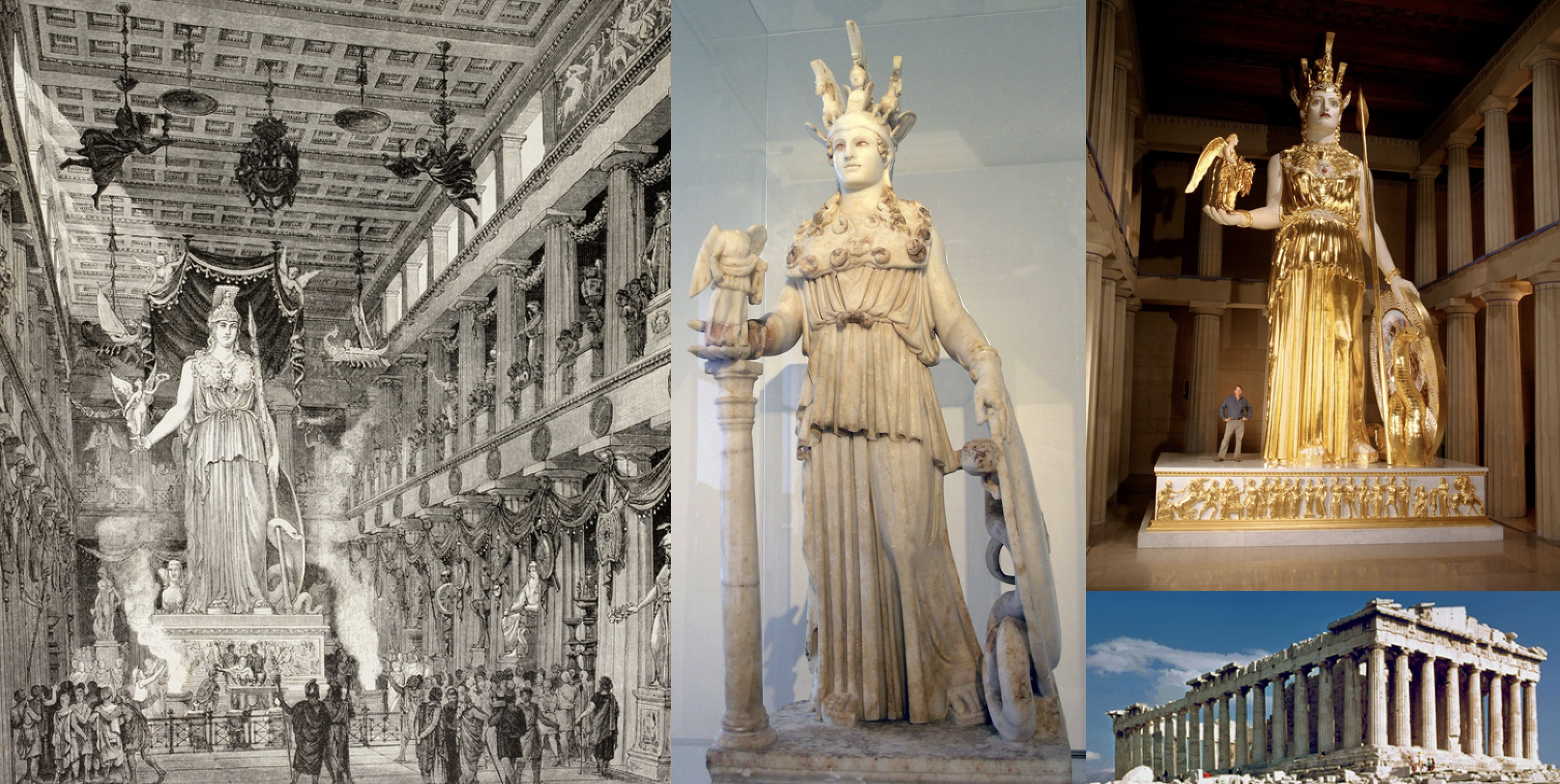
Full description
The master artist Phidias created the enormous gold-and-ivory (chryselephantine) Athena Parthenos, which was dedicated in 438 BCE and served as the Parthenon's spiritual focal point on the Athenian Acropolis. Wearing a full-length tunic and a crested helmet, the goddess, who stood almost 12 meters tall, was portrayed as a powerful and triumphant figure. According to Phidias's design, Athena's left hand rested next to a large circular shield and a sacred serpent, while her right hand held a small figure of Nike (Victory). The iconography of the original statue established the definitive Classical representation of the goddess, despite the fact that it has not survived. It serves as evidence of the great wealth and cultural influence of Athens in Pericles' day. Although the original statue has not survived, its specific iconography established the definitive Classical representation of the goddess. As a religious icon and a representation of the city's victory, it bears witness to the enormous cultural might and prosperity of Athens during the Pericles era. The sculptor, Phidias, was an Athenian sculptor from 490-430 BCE. He created the Athena Parthenos of the Parthenon on the Akropolis along with his masterpiece, Zeus in The Temple of Zeus at Olympia.
Comments
to view and add comments.
Annotations
No one has annotated a text with this resource yet.
- typeImage
- created on
- file formatpng
- file size3 MB
- CitationBritannica Editors. "Phidias". Encyclopedia Britannica, 10 Jun. 2024, https://www.britannica.com/biography/Phidias. Accessed 2 February 2026.
McDaniel, S. (2020, July 15). What really happened to the athena parthenos?. Tales of Times Forgotten. https://talesoftimesforgotten.com/2020/01/26/what-really-happened-to-the-athena-parthenos/
Statue of Athena Parthenos (the virgin goddess). MFA Boston. (n.d.). https://collections.mfa.org/objects/150203/statue-of-athena-parthenos-the-virgin-goddess
- creatorPhidias